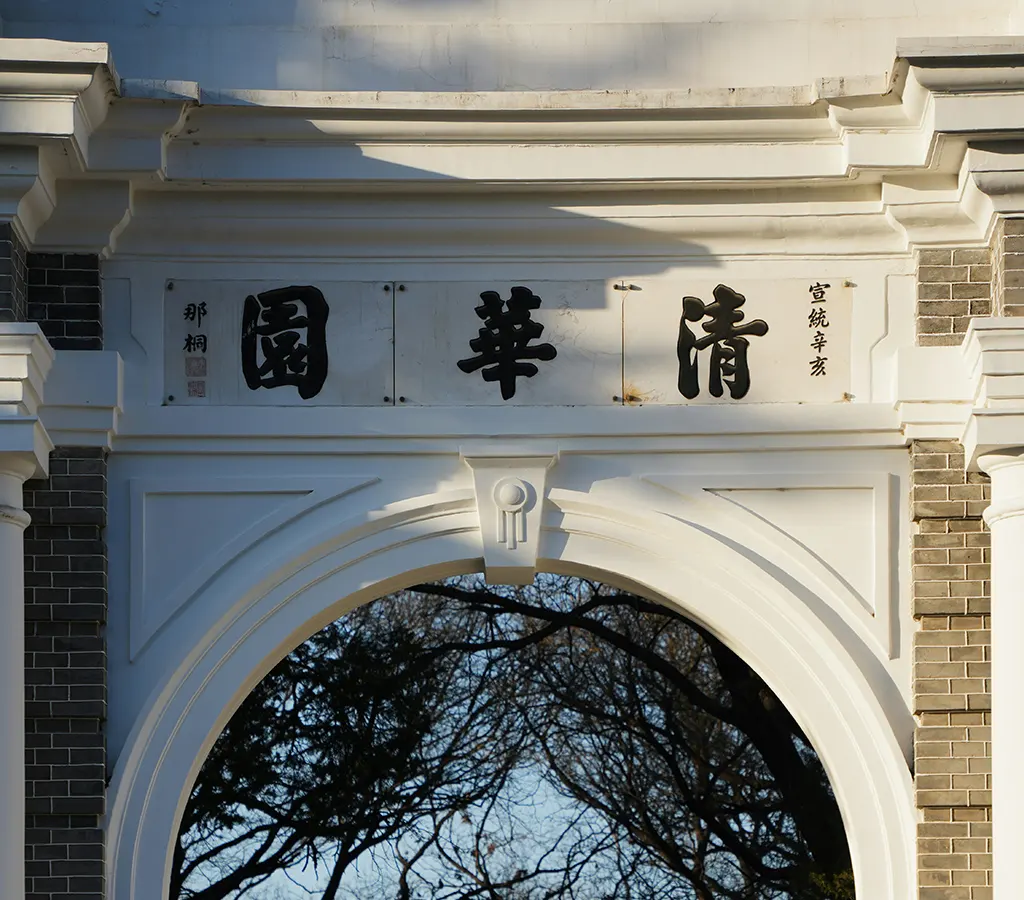
I. C9 League (China’s Ivy League)
Definition: Launched in 2009, it is China’s first university alliance of top‑tier institutions, consisting of the first 9 universities selected for the Project 985.
Members: Tsinghua University, Peking University, Fudan University, Shanghai Jiao Tong University, Zhejiang University, University of Science and Technology of China, Nanjing University, Xi’an Jiaotong University, Harbin Institute of Technology.
Members: Tsinghua University, Peking University, Fudan University, Shanghai Jiao Tong University, Zhejiang University, University of Science and Technology of China, Nanjing University, Xi’an Jiaotong University, Harbin Institute of Technology.
Core Strengths:
- Receive the highest level of national funding, with leading research budgets, numbers of academicians, and international rankings.
- Enjoy outstanding global academic reputation; graduates have strong advantages when applying to top graduate schools worldwide.
- Have elite alumni networks covering core sectors in politics, academia, and business.
Suitable for: Top‑performing students (e.g., SAT 1400+/A‑Level AAA+), those with strong academic ambition or preference for prestigious universities, students with sufficient family budget (annual budget 80,000–150,000 RMB+) or those eligible for full scholarships.
II. Project 985 (Now Integrated into “Double First‑Class”)
Definition: Launched in 1998 to build “world‑class universities”, with a total of 39 universities. It has now been fully integrated into the Double First‑Class initiative, but “985” remains a widely recognized symbol of academic excellence.
Core Strengths:
- Strong overall strength, comprehensive disciplines, mostly research‑oriented universities.
- Compared with C9, mid‑to‑lower tier universities (e.g., University of Electronic Science and Technology of China, Northwest A&F University) dominate in specific engineering or agricultural fields.
- High postgraduate recommendation rates and abundant international exchange programs.
Suitable for: Excellent students pursuing top‑tier higher education in China, with an annual budget of 60,000–100,000 RMB (or eligible for scholarships).
III. Project 211 (Now Integrated into “Double First‑Class”)
Definition: Launched in 1995 to support about 100 key universities and disciplines for the 21st century, with 116 universities (including all 985 universities). It is now merged into the Double First‑Class system.
Core Strengths:
- An unspoken threshold for middle‑and‑upper‑class employment in China; most central state‑owned enterprises and first‑tier city household registration policies explicitly use “211” as a screening criterion.
- Significant advantages over non‑key universities in postgraduate recommendation, government‑sponsored overseas study, and academic resources.
- Widely distributed across provinces, offering rich regional choices.
Suitable for: Students with good academic performance, who value employment competitiveness and plan to develop in regional central cities.
IV. Double First‑Class (World‑Class Universities and Disciplines)
Definition: A national dynamic selection mechanism launched in 2017, replacing Project 985/211 as the official authoritative label. It includes 42 World‑Class University Development Universities and 95 World‑Class Discipline Development Universities.
Core Strengths:
- Dynamic adjustment: No lifelong status; newly selected universities (e.g., Ningbo University, Tiangong University) are included for their distinctive disciplines, providing options of “lower overall ranking but top‑tier disciplines”.
- Discipline‑oriented: Focuses more on specific disciplinary strength. For example, Nanjing University of Information Science and Technology (Atmospheric Science) and Southwest Petroleum University (Petroleum Engineering) are non‑key but have world‑class disciplines.
- Officially endorsed, with guaranteed policy support and funding.
Suitable for: Students with clear major preferences, willing to prioritize flagship disciplines over overall university rankings.
V. First‑Tier Undergraduate Universities
Definition: Universities admitting students in the first batch of the national college entrance examination (Gaokao), mainly provincial‑ministry co‑built universities and provincial key universities.
Core Strengths:
- Supported by local governments, highly recognized in local job markets.
- Tuition strictly regulated by the state (ordinary majors: 5,000–10,000 RMB/year), offering high cost‑performance.
- Some have long traditions in specific industries: education, agriculture & forestry, finance & economics, medicine.
Suitable for: Upper‑middle students, medium budget (40,000–70,000 RMB/year), planning to work or pursue further study in a specific province.
VI. Second‑Tier Undergraduate Universities
Definition: Universities admitting students in the second batch of Gaokao, mostly public teaching‑oriented undergraduate institutions. Some former third‑tier universities (independent colleges/private universities) have been merged into this tier in recent years.
Core Strengths:
- Much lower admission thresholds than first‑tier universities, with more flexible academic requirements for international students.
- Living costs significantly lower than first‑tier cities (total annual expenses can be controlled at 30,000–50,000 RMB).
- Special scholarships for Belt & Road countries are available at many universities, with high coverage.
Suitable for: Average students with limited budgets, seeking a low‑cost Chinese undergraduate degree.
VII. Third‑Tier Undergraduate (Independent Colleges & Private Universities)
Definition: A historical admission category, not a quality label. It mainly includes independent colleges (e.g., Tan Kah Kee College, Xiamen University) and private undergraduate universities (e.g., Beijing City University).
Core Strengths:
- ✅ Undergraduate degree benefit: Students obtain undergraduate diplomas and bachelor’s degrees, which meet the “undergraduate” requirement for civil service exams, postgraduate study, and international degree accreditation.
- ✅ Unmarked degree certificates: Legally and academically equivalent to those from 985/211 universities.
- ✅ Friendly admission: High tolerance for high school transcripts and language scores, an accessible path to a nationally recognized undergraduate degree.
- ✅ Applied focus: Strong programs in foreign languages, business, art, IT, often with small classes.
Objective Limitations:
- ⚠️ Lower social recognition; often disadvantaged in screening by top enterprises and central SOE headquarters.
- ⚠️ Higher tuition: 15,000–30,000 RMB/year (30,000–50,000 RMB for some majors), much higher than public universities.
- ⚠️ Admission batch merging: Most provinces have merged undergraduate batches, but differences between public and private status remain; verify degree accreditation before applying.
Suitable for: Medium budget (40,000–70,000 RMB/year), needing an undergraduate degree as a springboard (postgraduate study / public service), not highly focused on university rankings.
VIII. Higher Vocational Colleges (Associate Degree)
Definition: 2–3 year vocational programs, awarding associate diplomas (no bachelor’s degree).
Core Strengths:
- ✅ Low cost & short duration: Public vocational tuition: 5,000–8,000 RMB/year (1/3–1/2 of private undergraduates); total cost can be as low as 25,000–40,000 RMB.
- ✅ Employment‑oriented: Deeply integrated with local industries; high coverage of “order‑training” and school‑enterprise cooperation. National model vocational colleges (100 total) are nationally reputable in CNC, nursing, culinary arts, rail transit, etc.
- ✅ Upgrade pathway: Graduates can take the college‑to‑undergraduate exam to enter a second‑tier or private undergraduate university, earning a full bachelor’s degree after 2 years.
- ✅ Special support for international students: Many offer English‑taught programs or full government scholarships with nearly zero admission barriers.
Objective Limitations:
- ⚠️ Degree ceiling: Less than 10% of civil service / public institution / SOE positions are open to associate graduates, mostly basic operational roles.
- ⚠️ Weak academic depth: Curricula focus on skills; direct admission to research master’s programs is difficult.
- ⚠️ Social stereotype: Still widely seen as a “second choice” for students who could not enter undergraduate programs.
Suitable for: Very tight budget (below 30,000 RMB/year), skill‑oriented, or planning the pathway: Vocational College → Undergraduate Upgrade → Master’s Degree.