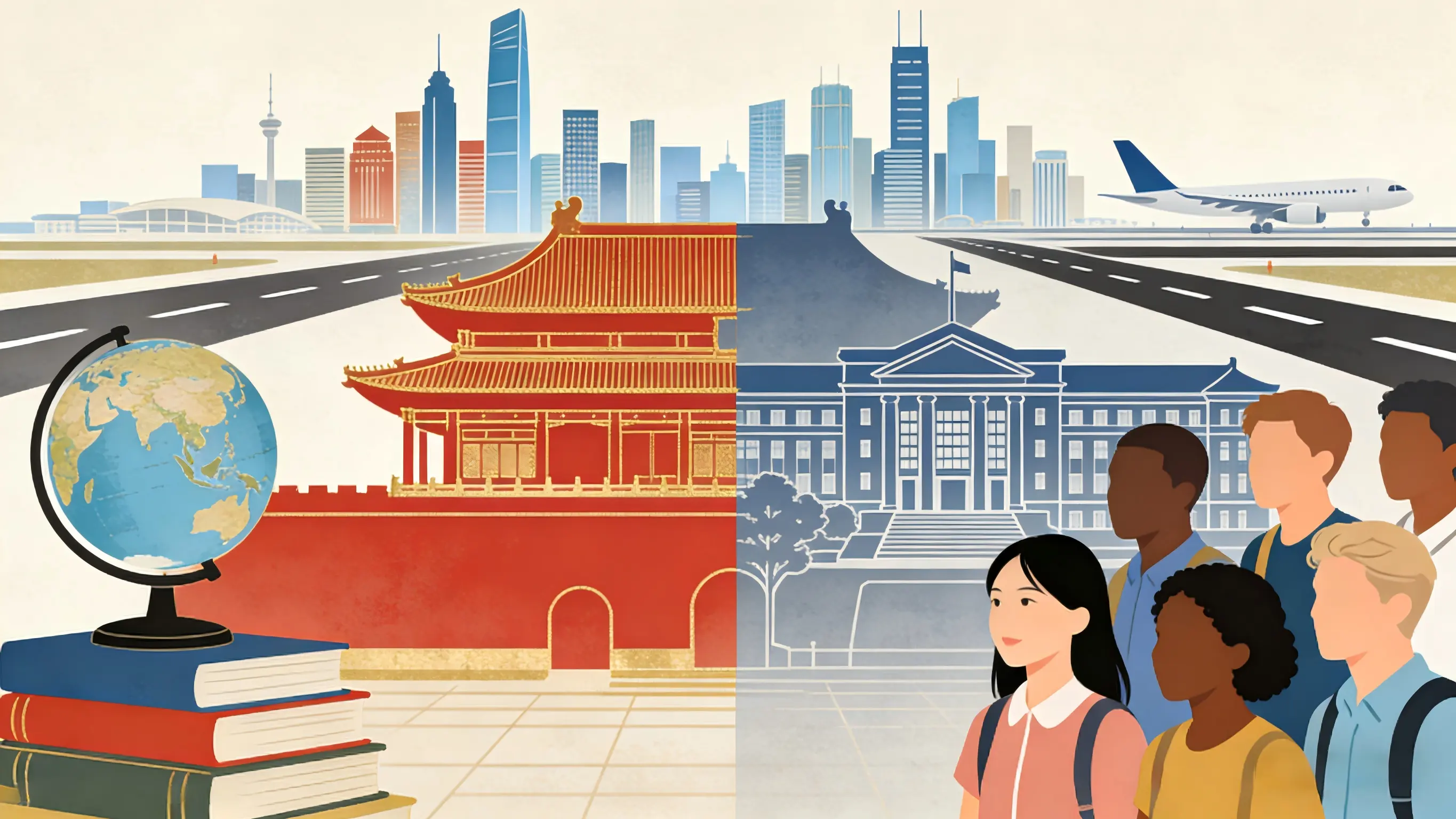
With the growing global influence of China’s higher education, more and more international students choose to study in China. However, facing so many majors, how can you make a wise decision? This article provides a practical guide to major selection tailored to international students.
I. General Principle: Play to Your Strengths – Prioritize Arts & Business
For international students without a Chinese middle/high school math foundation, STEM majors (Science, Technology, Engineering, Mathematics) are NOT recommended.China’s STEM education is known for being rigorous and deep, and local students usually have strong mathematical backgrounds. If you have weak math/science foundations, you will likely struggle and find it hard to compete.Therefore, focusing on Arts and Business is a much safer and smarter strategy.
These two fields have relatively low entry barriers, highly compatible knowledge structures, and great flexibility for future career changes. In China’s education system, Arts and Business are grouped under the “liberal arts category” with blurred boundaries, giving international students more room to explore and adjust.
II. Highly Recommended: Flexible Combinations of Arts & Business
Arts and Business are not just safe choices—they are promising pathways.
Flexible switching & broad prospects:Arts graduates (Chinese Language, Journalism, International Relations, etc.) can easily move into Business (management trainee, marketing, PR) using strong cultural understanding, communication and analytical skills.Business graduates (Marketing, International Trade, etc.) can shift to media, content creation and cultural industries using market insight and management knowledge.
Selection advice:Don’t over focus on minor major differences. First ask yourself:Do you prefer language, culture and ideas, or market operations and business logic?Choose a major you are truly interested in—it will keep you motivated.On this basis, choose a high tier university in a resource rich city for better opportunities.
III. Choose Carefully: Special Challenges of Law
Law requires extremely careful evaluation.
Main limitations:
Employment barrier: International students cannot take China’s civil service exam, closing off core legal careers such as judge or prosecutor.
Legal system differences: China uses the Civil Law system, which is fundamentally different from Common Law in many countries. Content may not directly apply back home or for international clients.
Iron rule for choosing schools:If you are strongly interested in Law and have a clear career plan (e.g., China related international legal affairs), you must get into a top law school or a top comprehensive university. Only these can provide high quality training, moot court opportunities and key law firm internships. Without these resources, international law graduates will face severe challenges.
General suggestion:Unless you have a very clear and firm career plan (e.g., family business with China operations), law is not recommended as a first choice for most international undergraduates.
IV. Strategy Within Business
Within the broad business field, you can choose based on personal preference.
Most business majors:Marketing, Business Administration, International Trade, etc.Low professional barriers, broad knowledge, practice oriented.Follow: Interest first, university reputation second.
Special recommendation – Accounting:High professionalism and technicality.Knowledge is universal—the “international language of business”.With qualifications like ACCA, it is highly recognized worldwide.Accounting offers a stable, technical career path, suitable for students willing to specialize deeply.Must align with long term career planning.
Summary & Final Suggestions
|
Major Category |
Recommended Reasons |
Risk Warnings |
|
Arts / Business |
Low entry barriers; flexible switching; wide employment; strong adaptability. |
Must focus on university tier and city to gain sufficient resources. |
|
Accounting |
High professionalism; strong technical barrier; good international applicability. |
Courses may be dry; must match long term career goals. |
|
Law |
Only suitable for those with clear, firm career plans. |
Limited employment (cannot take civil service exam); legal system differences; highly dependent on top universities and internships. |
|
STEM |
(Generally NOT recommended) |
High math & basic knowledge requirements; international students often at a disadvantage; heavy academic pressure. |
Finally, before choosing any major, please learn in advance about China’s work visa policy for international graduates, and avoid fields with obvious employment restrictions (such as sensitive majors related to national security).
Studying in China is a journey of discovery and growth.May all international students find the best major based on their interests, strengths and plans, achieve academic success, and have a bright future!